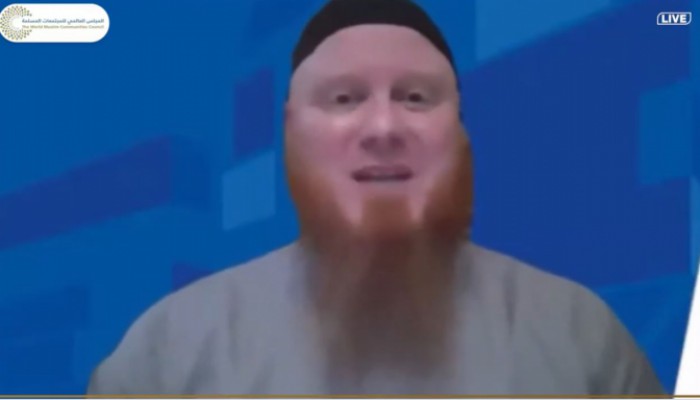
TWMCC Holds Online Lecture Hosting Dylan Chown
- 2026-Jan-26
The World Muslim Communities Council (TWMCC) held an online lecture featuring Dylan Chown, Lecturer at the Centre for Islamic Thought and Education (CITE), University of South Australia, as part of its ongoing intellectual and educational series. The talk focused on Chown's personal transformation, the influence of key relationships, and the value of diversity in education.
Chown reflected on the pivotal moments in his journey, emphasizing how growing up in a Christian family with limited exposure to Islam shaped his perspective. He highlighted that engaging with Islamic educational institutions became a turning point that significantly influenced his path.
His journey led to his graduation, a faculty role, and diverse teaching experiences, all of which contributed to his understanding of contemporary educational practices.
Chown shared that his first meaningful encounter with Islam began at age 14. He formed a close friendship with a Muslim classmate. Through this friendship, he entered a Muslim household for the first time. He read Islamic books and saw images of the Holy Kaaba, as well as scenes of prayer and pilgrimage. These early experiences sparked his curiosity, leading him to reflect and research for a deeper understanding.
He described this friendship as a profound blessing. It played a central role in shaping his life. His friend guided him toward Islam and supported him throughout his journey of faith. This relationship continues to this day.
Furthermore, Chown noted that he now teaches his friend’s younger brother. This underscores the enduring bond between their families. He recalled his first visit to a mosque. An open discussion with the imam, along with the opportunity to ask questions, led him to declare his intention to embrace Islam and recite the Shahada.
In discussing the educational context in Australia, Chown highlighted the country’s cultural and religious diversity. He explained that educational institutions bring together students from different backgrounds. These include Muslim and Christian backgrounds, Indigenous communities, and a wide range of nationalities.
This diversity, he emphasized, enriches the learning environment, promotes mutual understanding, and allows students to engage with new perspectives, ultimately fostering a more inclusive society.